
Look for the Helpers: A Helene Story
Runtime: 38:57Look for the Helpers: A Helene Story, is a short documentary that highlights the hometown heroes driving recovery efforts after Hurricane Helene devastated Western North Carolina in 2024. Through the director’s personal connection to the Appalachian Mountains, the film offers an intimate look at communities rebuilding in the wake of disaster, focusing on stories of resilience, hope, and collective action that inspire viewers to engage with and support their own communities.

Director - Lainie Robertson
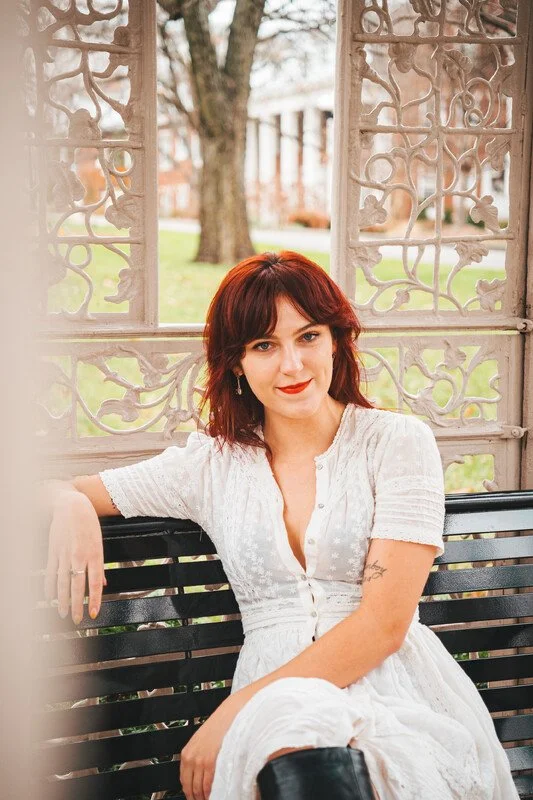
Lainie Robertson is a Nashville-based filmmaker and a graduate of Belmont University. Originally from Hendersonville, North Carolina, she draws inspiration from her Appalachian roots and incorporates that heritage into her work whenever possible. Look for the Helpers: A Helene Story marks Lainie’s debut as a documentary filmmaker.
Directors Statement
In September of 2024, I was a student in Belmont University's film program in Nashville, Tennessee. I was in the middle of a series of stressful school projects when I got the news that my home region of Western North Carolina had been devastated by Hurricane Helene. What followed was one of the strangest grieving processes I've ever experienced. Our beautiful mountains were devastated. So many people died in the storm. Families were left without homes, communication, or safe water for drinking and bathing. Tensions rose as resources became scarce, and it quickly became obvious that not only was the region's infrastructure unprepared for a disaster like this, but the media didn't seem to be giving Western North Carolina the attention it deserved.
I felt anxious in my inability to help and desperately wanted to be home with my community. It became difficult to care about my day-to-day routine in Nashville when I knew people back home were hurting. I reached out to my school and proposed a fundraiser to support Western North Carolina. To my surprise, I found that it’s incredibly difficult to organize an event on a college campus if you aren't affiliated with a student organization or sorority. I was back at square one, feeling relatively hopeless about how I could be useful.
I was venting these frustrations to one of my film professors, Jennifer Bergen, when she encouraged me to start documenting the process of trying to help my community. At first, the idea felt strange. I knew there was already mistrust between survivors and the independent film crews that had begun arriving in the area. I worried about exploiting a trauma that I wasn't personally experiencing. I wanted to be sensitive to the survivors, and after some thought, decided the most meaningful way I could be of service was to use film to help amplify the voices of my community. So we began the journey of making this documentary.
In the initial stages of prep, we had some obstacles to tackle. Belmont University didn't offer a documentary production as a track for film students. My professor, Jennifer Bergen, became my mentor through the process and suggested I take her Documentary Film Editing class the following semester so that I could begin production. The entire Motion Pictures Department became interested in the project, and as the story developed, they stepped up to help me make sure the film was made. The Documentary Film Editing class was adjusted to include production so that I, and six other students, could use Belmont’s gear to create a short ten-minute documentary.
Quickly into filming, we realized this project would need more than the ten minutes to tell the story. So that spring semester, we filmed as much content as we could with the intention that we would take whatever footage we got and edit it on our own after the semester was over. But after the first semester of filming the Motion Pictures program offered to allow me to finish the documentary as my senior thesis and created a course for the project. They considered this a pilot course to see if they would want to create a new documentary branch of Belmont’s Motion Pictures Program. This had never been done before at Belmont, and I felt honored that they put so much trust in the project. I worked with professors to write out the course syllabus and was given full creative control of the project, and its run time. Ultimately, we decided on the short documentary option and aimed for a run time just under forty minutes.
Throughout the filming process, I gained so many new personal relationships, one of the most meaningful ones being with my film partner, Lauren McNamara. Outside of crossing paths on a few sets, we barely knew each other before taking on the documentary. Thankfully, that leap of faith paid off. We were both film students, and neither of us had ever taken on a project of this scale before, so we made mistakes. One early on cost us an entire day's worth of footage and caused a reshoot weekend. Lauren and I handled camera, sound, producing, and organization ourselves. It was an exciting mess, and we were both thrilled to work on it together. Bringing Lauren home with me helped define the feeling we wanted the film to have: as if you're showing a friend around your hometown, sharing your favorite memories while navigating the contrast of debris, wreckage, and ongoing reconstruction.
Throughout the interviews, common threads began to emerge between our subjects: frustrations with aid and resource distribution, questions about what life could look like if we changed the social systems that support us, and a deep gratitude for the Appalachian community. During production, we often wondered how we would connect all of these stories into a cohesive film. After a lot of discussion, we decided that I should sit down for an interview as well. So much of the story revolved around my family, my home, and the relationships we were building with our subjects. It was personal. For my interview, we pulled photographs from my upbringing in Appalachia. We wanted the color grade to reflect the natural tones of the forests and the scoring to resemble the folk and bluegrass music I grew up around.
In many ways, making this film became a spiritual journey for me. Growing up in Appalachia, there were many difficult aspects of living in such a rural place. In my early twenties, I moved away, but whenever life gets difficult, you'll still find me on a trail somewhere off the Blue Ridge Parkway. The mountains are special like that. They hold space for pain, but also for healing.
Making this film changed the direction of my career path and gave me a renewed sense of connection to my hometown. We hope the film offers a clearer picture of what it actually means to live in rural Appalachia. It's not all cryptids and backwoods conservatives. These are real people living full, complex lives who deserve help just as much as anyone else. Most of all, we hope the stories shared by our subjects inspire you to get to know your neighbors and find ways to become a helper yourself.